


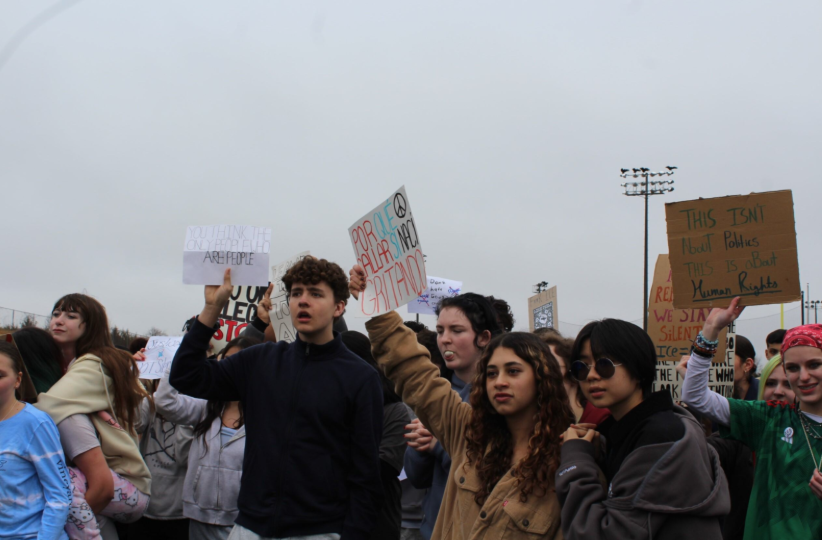
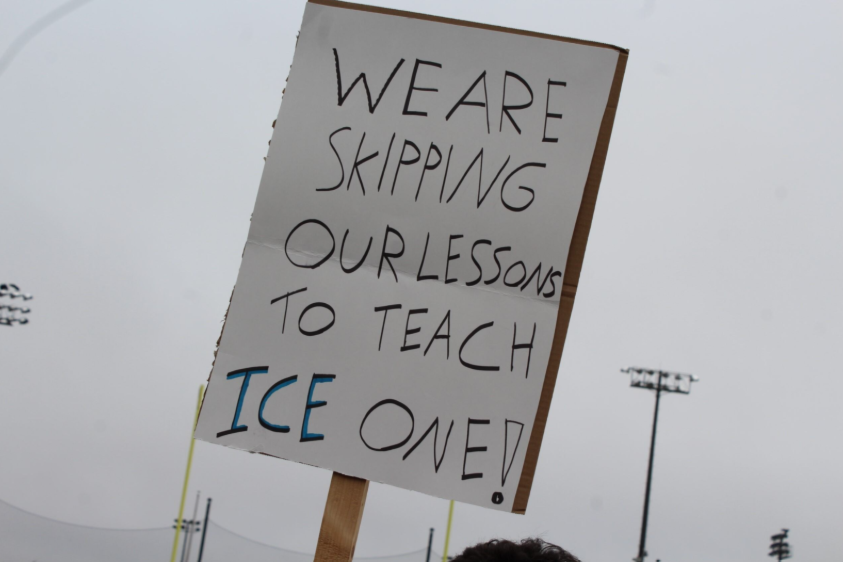
“We skipped our lesson to teach ICE one,” read a sign held above a crowd of students at Patriot High School. This message was one of the many displayed among the student-led walkouts in high schools throughout Prince William County.
Across the county, high schools have been participating in student-led walkouts to protest U.S. Immigration and Customs Enforcement (ICE) actions happening around the nation. High schools such as Osbourn Park, Gainesville, Battlefield, Patriot, Colgan, Hylton, Woodbridge, and Freedom participated in these walkouts.
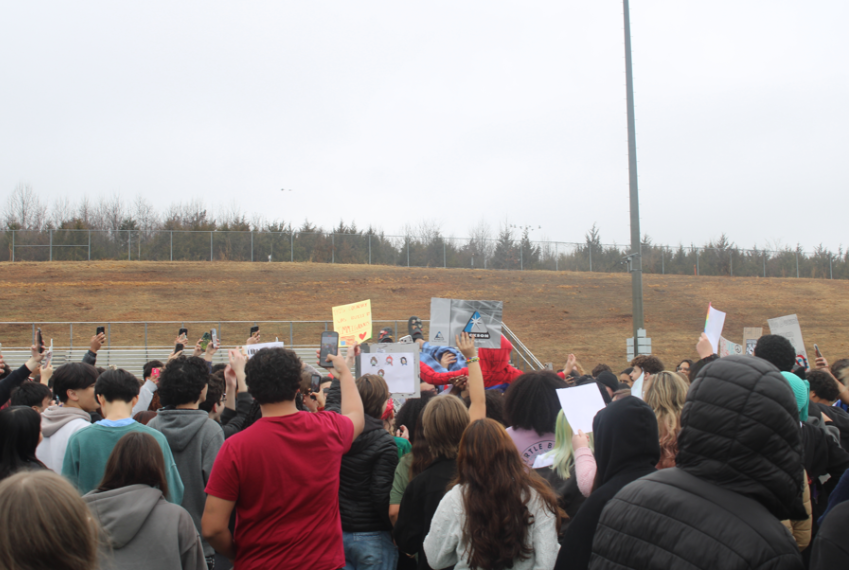
Sawyer Cook, a junior at Patriot High School, attended the Patriot protest on Feb. 20, 2026. “By participating, I wanted to help raise publicity surrounding the movement locally and help amplify a narrative of how ICE raids really impact adolescents.”
This perspective is largely shared by many other students participating in protests throughout the county, which is why the turnout of students attending these protests was so high. Cook goes on to say, “I know a lot of people and communities who have been brutally impacted by ICE, but what really took precedent for my resistance was really my morals for how people anywhere deserve to be treated.”
Gainesville High School students Mustafa Boudjerada (‘26), Rania Ahmed (‘27), and Ciara Vaughan (‘27) are among students who share this opinion. At the Gainesville protest, they assisted in event organization by talking to staff at their school, as well as leading the crowd of students around campus during the walkout.
Boudjerada recounts his experience leading the crowd. “At first, [I was] very nervous [and] very stressed, because there [were] around 300 students looking at me, expecting me to say something when I had the megaphone in my hand.”
He adds, “It felt good knowing that a lot of students wanted me to speak up more… [it] helped me use my voice and show everyone [that] we can all do this together… It just made me happy knowing that all these people came together for a cause they really cared about.”
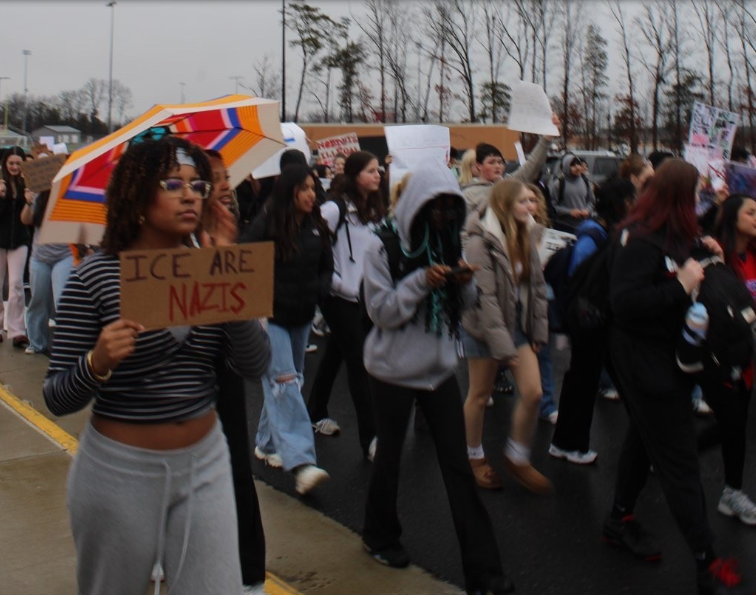
Unfortunately, walkouts across the county were met with some negative responses by students, whether they took place through the media, the rest of the day after the protests, or even during the protests. Cook recounts the Patriot protest as being attended by groups with a “less-serious disposition about the protest.”
Fortunately, these groups only accounted for a small percentage of protest attendees. Cook further states that there was an increased amount of people practicing the more appropriate stance of somberness and seriousness.
“There was definitely a lot of energy circling,” Cook stated when asked about the atmosphere of the protest. Additionally, Ahmed described the Gainesville protest as crowded and empowering. Vaughan seconds this, saying, “It was a very surreal moment. It was really cool to see everyone collectively come together and express their feelings.”
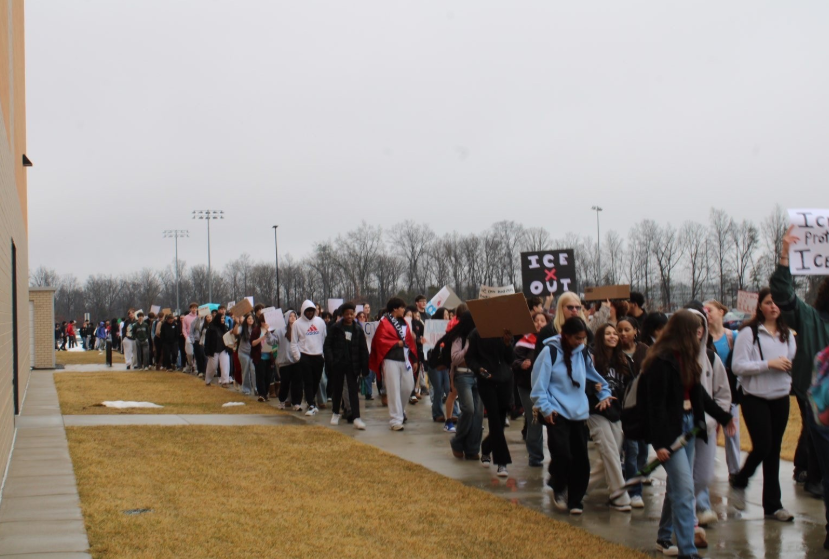
Boudjerada reflected on a point during the protest where two students had come up to him and told him that “for the first time, it actually felt like a community.”
However, this uniting moment did not come without a backlash. Boudjerada received a referral and suspension, followed by social restrictions and prohibited school activities. 60 other students, including Ahmed, had received detention.
Not only did Gainesville face consequences, but so did another school: Woodbridge High School.
At Woodbridge High School, students similarly gathered to share their voices and concerns. However, when students left the school’s campus without permission, consequences were administered. According to Myles Cooper, a senior at Woodbridge High School, “300 kids walked out… [and] all 300 got a three-day suspension. They were suspended from that Friday up until Wednesday.”
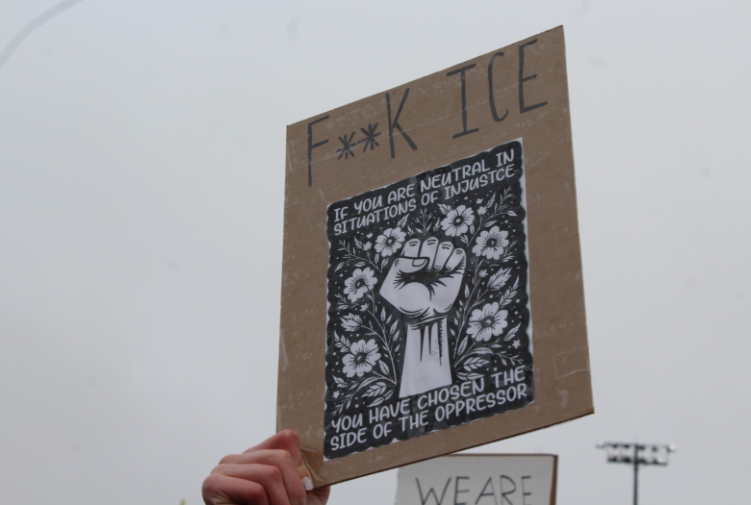
According to Working Knowledge, “most protests don’t change long-term views.” Ideas like these may discourage students from taking part in these activities and reduce active participation. Because of this, some students may choose to be neutral and not express their views due to fear of their actions not making a difference.
Boudjerada still maintains that students should try to make an impact however they can.
“We can’t change everything overnight just because some people want to, but we can make our voices heard and express ourselves in an honest way. I don’t think anyone should be sitting down and pretending like all [of] this isn’t happening.”
Cook agrees with this, stating that even though students cannot directly change the situation, awareness can still be spread.
“I definitely think student [participation] has a lot of impact. While we may not hold the means to reform policy or governmental action, amplifying the student narrative about the extent to which ICE raids hold a local impact.”
A Key Club article describes youth activism as a “potent tool for bringing about change in our neighborhoods and the wider world.” Furthermore, it mentions that “teenage activists’ tenacity and drive can have a significant impact within and outside their communities.” Additionally, youth participation in activism leads to a more inclusive, safe, and compassionate community.
Cook seconds this idea. She says, “Youth activism serves as a prospect for future change, as well as insight into how impactful an issue it is. When given the forum to voice how we think and feel, our opinions hold future promise for fruition.”
The Center for Information and Research on Civic Learning and Engagement (CIRCLE) at Tufts University states that “[The youth] have unique perspectives on local issues, they often bring new ideas to the table, and they can be an inexhaustible source of energy and passion for social change.”
In relation to this, Cook says, “In a space where our thinking isn’t forced into conformity, it gives teens a sense of validation for how they feel… when you see resistance amongst those who don’t yet hold the power to vote against these problems, you know they carry just that much more weight.”
CIRCLE additionally mentions that youth activism “carries important benefits to those who participate—especially for low-income youth, youth of color, and other young people who have been historically marginalized from civic life.” Furthermore, research shows that youth participation in community activism also carries benefits in academic performance and social-emotional wellbeing among other positive impacts.
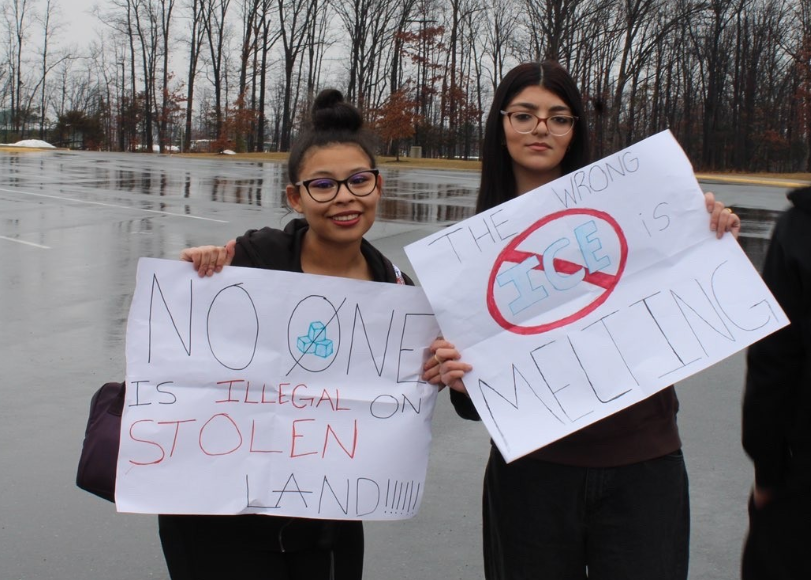
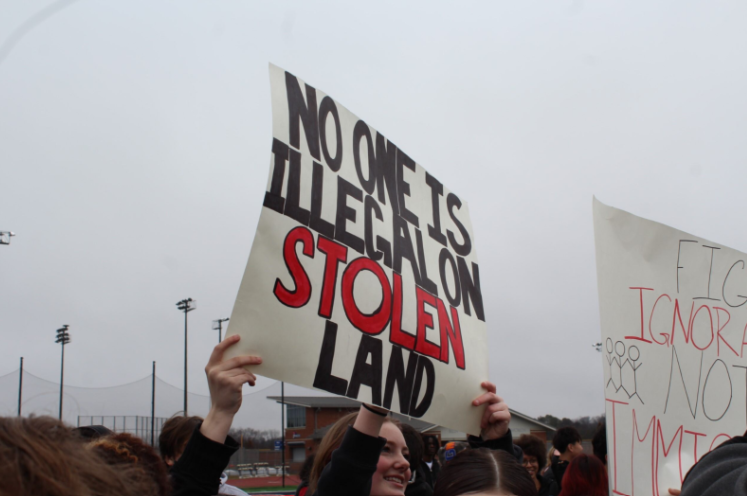
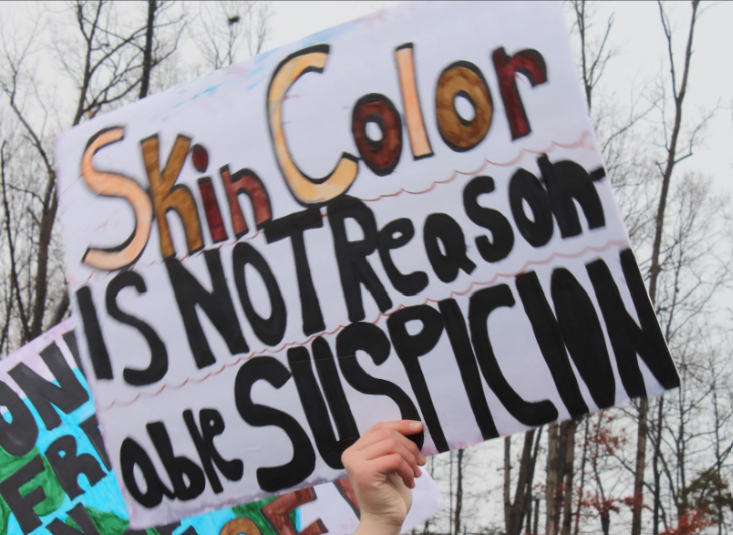
Many students carried customized signs that were impactful and creative in their own unique ways. Some signs illustrated personal connections to immigration, while others quoted songs or messages about identity and belonging. Several stood out.
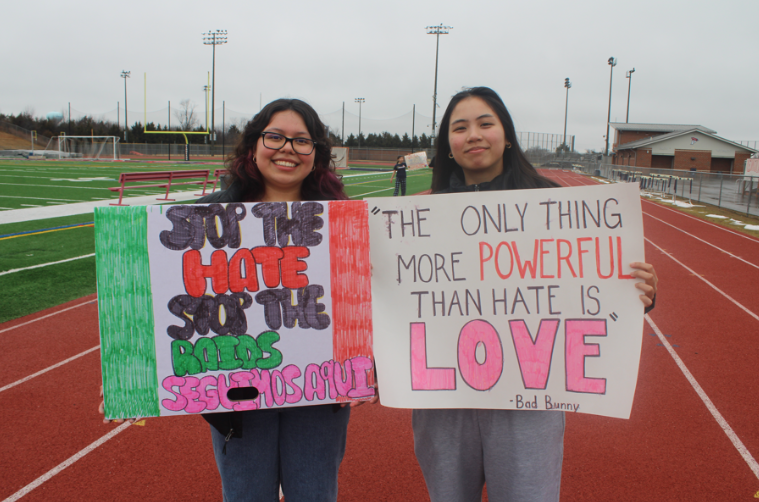
“Stop the hate, Stops the raids, seguimos aqui”.
Near the bottom, Seguimos aqui, is a common phrase in Puerto Rican culture meaning “We are still here” signifying continuity and resistance.
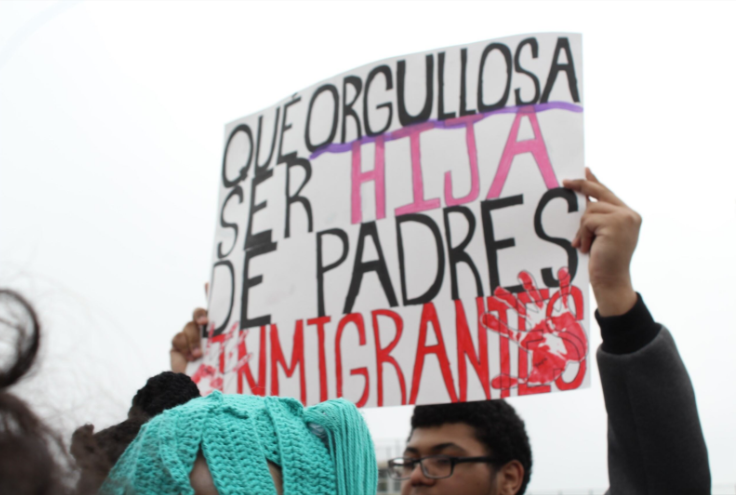
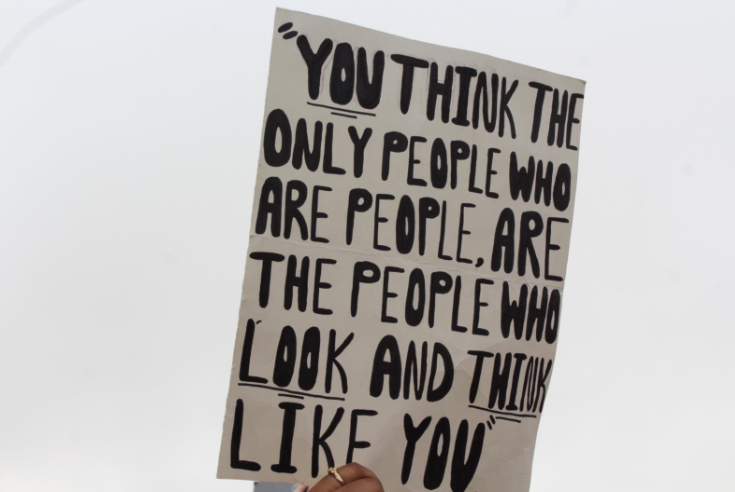
This sign was a quote from the song “Colors of the Wind” written by Alan Menken and Stephen Schwartz.


![A picture of a soccer ball on the floor taken on Wednesday, Feb. 11, 2026 [Granaz Nabi Bakhsh]](https://phscharge.com/wp-content/uploads/2026/02/Granaz-Photo.png)
![Photo of Patriot High School students water bottles that were bought during different periods of time, each to when they were trending. [Marina Georgy]](https://phscharge.com/wp-content/uploads/2026/02/recession-2.png)