


For many students, sophomore year is harder than what students would ever expect. Instead of students feeling more confident with their classes and grades, students often feel more stressed, tired, and unmotivated, which can lead to their grades dropping significantly.
According to U.S News, the sophomore slump often happens because academic expectations increase while students get less support from their teachers than they did freshman year.
Even though some people might think the sophomore slump is just an excuse or that it doesn’t exist, it is actually something many students deal with during their sophomore year. Brae Chambers, a sophomore at Culpeper High School said, “many people joke about the sophomore slump, but [she] believes it is genuinely a real issue students deal with.”
The sophomore slump affects more than just grades. When motivation declines, students may experience reduced confidence and increased mental health struggles. According to American Psychological Association (APA), a large number of teenagers experience unhealthy levels of stress and school pressure is a major reason why.
According to Humanities & Social Sciences Communication, when students feel overwhelmed for long periods of time, they often experience a “shut down” response which can lead to anxiety, discouragement and a decrease in asking for help when they need it.
Many students also notice many changes in support they are given by teachers during their sophomore year. According to Nicky Slavich at Azusa Pacific University he stated, sophomore year represents an often-drastic transition and pressure to ‘figure it out.’
Many studies support the idea that students begin to feel less supported as they progress through high school. According to U.S. News, many students receive strong guidance and attention during freshman year, but that support often fades during sophomore year as teachers expect students to be more independent. The article explains that this sudden increase in responsibility, along with less help, can leave students feeling overwhelmed and unsure of where to ask for help.
Chambers said, “[she] wishes students had more support when they are confused.” She then mentioned that “while teachers often go over work, some students do not understand it the first time and need it explained in a different way.”
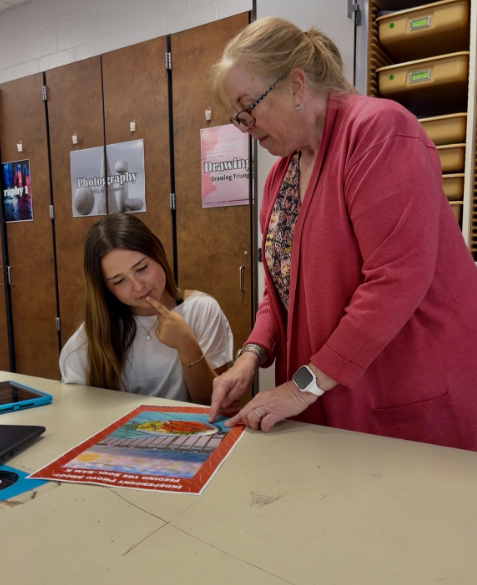
Saufiyah Amon, a sophomore at Patriot High School, said that “[she] wishes teachers would emphasize with student more because they give us work like students have other work like they don’t have other classes to do work in.” She then added, “she wants teachers to be easy on themselves and your students to”
Chambers also said, “[she] feels some teachers think students should already understand the material because they have learned it before or worked on it for a long time.”
Amon then mentioned that “[she] doesn’t know what the teachers would do for [her] if she felt overwhelmed, but [she] feels that counselors can help with colleges [she] wants to go to and how [she] can get into those colleges.”
Grades are also starting to feel more important during sophomore year. Many students are taking harder classes while also balancing sports, jobs, and other activities. According to U.S News, sophomore year grades affect a student’s GPA, which can add a lot of pressure.
Chambers said that “[her] GPA makes her feel pressured to keep it above a 3.0 and pushes [her] to do better when [she] receives a low grade and that it puts a lot of stress on her to do better so it doesn’t seem like [she’s] failing.”
Amon added that “[she] wants teachers to stop giving us so much work in one class when they know that we have other classes we have work to complete in.”
Social pressure can also play a role in the sophomore slump. According to Penn State Comparison in the Classroom article, it mentioned that “the social comparison theory can make academics very difficult for children and that that students that are not doing as well as their peers might give up and believe they do not have the capability to the work correctly.”
Many students compare themselves to their peers and feel afraid of falling behind. According to the Harvard Graduate School of Education (HGSE), constant comparison can increase stress and lower confidence in teenagers. Chambers shared that emotionally she “stopped caring as much about what people said about her.”
She explained that “in freshman year [she] dealt with rumors but during sophomore year [she] cared less about others’ opinions.” Even though she feels like “[she] struggles more academically, [she] is still able to keep[her] grades]at B’s and C’s instead of D’s and F’s.”
Burnout is another major factor of the sophomore slump. Chambers shared that during second semester, “a lot went down and [she] gave up.”
She added, “after winter break is when [she] started to lose motivation for [her] work, school and hobbies.” According to HGSE, burnout often shows up as being constantly tired, procrastinating or feeling disconnected from school.
Amon stated that “[she] felt a drop of energy before spring break and that it was the worst and that [she] had no motivation.”
Chambers also believes that burnout is also affected by how students are treated by teachers. Chambers explained that “just because students are sophomores and around 15 or 16 years old does not mean they will always be on task, since they are still kids”
She then mentioned that “students have lives outside of school just like teachers do but often feel less empathy when they turn in assignments late.”
Amon mentioned that “[she] thinks that teachers expect the same of students compared to freshman year and that it’s better this year and that they are guiding you more.”
Lack of sleep can also make the sophomore slump even worse. Many high schoolers do not get enough sleep because of homework, activities, and stress. According to UCLA Health, high schoolers ages 13-18 are recommended to get 8 to 10 hours of sleep per night.
Chambers mentioned that “[she] gets close to 7 hours of sleep a night.”
Even though the sophomore slump can be challenging, there are still ways to manage it. According to U.S News, staying organized, setting realistic goals, and communicating with teachers can help students feel more in control. Mental health professionals also encourage students to ask for help before stress builds up too much.
Chambers advised sophomores not to stress too much about grades, but to still try their best and stay on top of their work. She encouraged students not to skip class or procrastinate, explaining that it only makes things harder. Amon also agrees with Chambers that students shouldn’t procrastinate their work. Overall, she wants sophomores to have fun, worry less about grades and make the most of their high school experience.
Amon also advised sophomores to not let the work.She wants students to do their work during school since you’re already there and that you won’t want to do it when you get home. She also wants everyone to know not to get into too much drama.
While the sophomore slump can be hard, it does not last forever. Many students struggle during sophomore year because of pressure, stress, and higher expectations. Having teachers understand the way the students are feeling can help students feel less alone. With support, time and patience students can get through sophomore year and still enjoy the rest of their high school experience.





![Photo of Jack Shehata’s room, where he does all his business activities in. [Photo by JackShehata | Used with permission.]](https://phscharge.com/wp-content/uploads/2026/02/business-photo-2.png)