


Behind every teacher there is a high school student who once had teenage dreams, mistakes, and moments that shaped the person they are today. Those stories lead to advice and wisdom that students now may not know they need.
John White
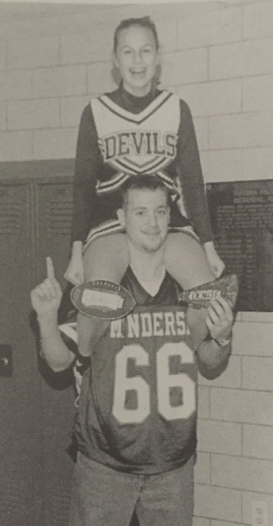
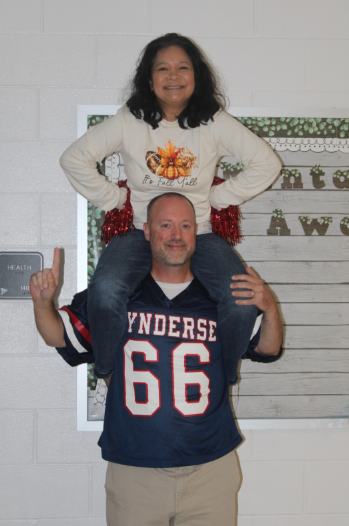
John White, the sports medicine teacher at Patriot High School, shared many memories from his teenage years and reflected on advice he would give to his past self and current high schoolers.
White had a very packed schedule. He was the captain of the football team, played basketball, had a relationship, worked a full-time job, and maintained honor roll grades. “As a younger student [I struggled with] time management” exclaimed Coach White.
Not only did White struggle with it, but so did many other students. According to the Association for Supervision and Curriculum Development, “Procrastination or time management is a major source of stress for 55 percent of high school students” who take their survey.
To help improve his time management, White said, “making lists is one of the best things he has done.” He always makes a daily priority list and makes sure he gets that done. He mentions that it helps him stay focused throughout the day.
The Psycho Wellness Center supports White’s advice. Making lists helps increase productivity and improves time management. With the to-do list, you will be more mindful about the things you need to get done and adjust your schedule accordingly.
White talked about one of his most impactful teachers, his health teacher, Coach Henry. White described him as “somebody who always somehow made class fun…and made something that was a little difficult, pretty simple.” He described Coach Henry as an easy person to be around because he engaged with the students and had real conversations with them.
One of White’s biggest regrets in high school was not getting shoulder surgery during his sophomore year. White injured his shoulder 16 times in high school and kept doing physical therapy because he did not want to spend a whole season out of football. With multiple college recruiters looking at him, they ultimately decided to pass due to his shoulder.
Still, one of his proudest moments in high school was being named captain of the football team. Despite the many injuries and rehab, he worked during the summer to pay for football camps and pushed himself to be better.
“I had earned that. There were a lot of players who were most likely physically better than me, but I had earned that over a bunch of kids because of how hard I worked,” White stated.
When asked what advice you would give to seniors, White remarked that responsibility is important. White said that “doing the most responsible thing first, instead of doing what you want to do is the hard part about growing up”
White mentioned that everyone’s lives and timelines are different. White says, “there is so much more time than you think.” White himself had many obstacles during his senior year. His parents moved so he was on his own moving around to different places.
He didn’t go to college right away like the people around him did. He transferred many times and did not graduate college until he was 26. Although he didn’t start right away, he is still happy and satisfied with his life now.
Michelle Cooper
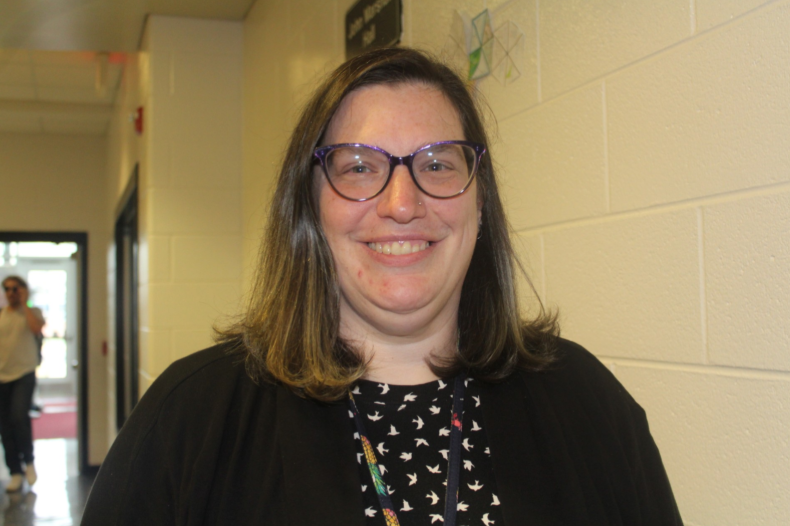
Michelle Cooper is an Advanced Placement (AP) US history and Dual Enrollment (DE) US History teacher. Cooper reminisced about her high school years and advice she would give high school students from it.
Cooper read thousands of books as a kid. She would have rather been reading a book than doing classwork. Cooper loved English books like Fahrenheit 451 and Brave New World.
Cooper’s favorite teacher was her AP US History teacher, Mr. Coffman. Cooper stated that he “had a way of telling history, not just by writing things on the board, [but through] stories.” The way in which he taught history showed Cooper something different and new that she enjoyed.
In high school, Cooper considered herself a low achiever. She rarely studied but also never struggled in any class. She still managed to get good grades and didn’t put in any extra effort. Although at college she learned fairly quickly that her work ethic was not going to work.
In college she started to realize that she needed to learn how to study more efficiently. During her first semester in college, she almost flunked out because of her work habits. Cooper stated that she is “glad she decided to go into college, because it taught her how to work harder and to actually study.”
Cooper stated that one of the things that she would recommend to students that can help with college preparation is DE Classes. Cooper exclaimed that DE classes are perfect for preparing for college because you get a taste of what the experience is like.
Cooper notes that “a lot of them started off struggling, but into the second unit they are sliding into the pattern [of the required work habits].”
Through that experience, the advice she would give to students is that “failure of academics is not the end of the world…it’s meant to teach you,” Cooper stated. Cooper was the type of student who would shut down if she failed something. She explained that when you fail something, it’s not to punish, but to help you improve.
An article written by Radu Atanasiu, in Psychology Today, supports Cooper’s claim and states that “learning starts with a failure that challenges the way we thought things worked.” When people see errors, they start off with what they did wrong instead of the lesson right away.”
Cooper suggests that a habit students can start to improve their work ethic is making a reward system. To help get work done, Cooper as a student would create a reward system after completing an assignment.
Cooper started with the hardest assignment first and then gave herself a reward with either candy or a fun activity. Her go to candy for rewards was starburst. Cooper states that “as long as you control yourself, it is a great tactic.”
Evidence from the Educational Wave, proves that creating a reward system can improve your work habits. It increases focus and motivation, while also using positive reinforcement. Rewards also provide students with a sense of accomplishment which boosts their inner confidence.
Lindsey Cavender

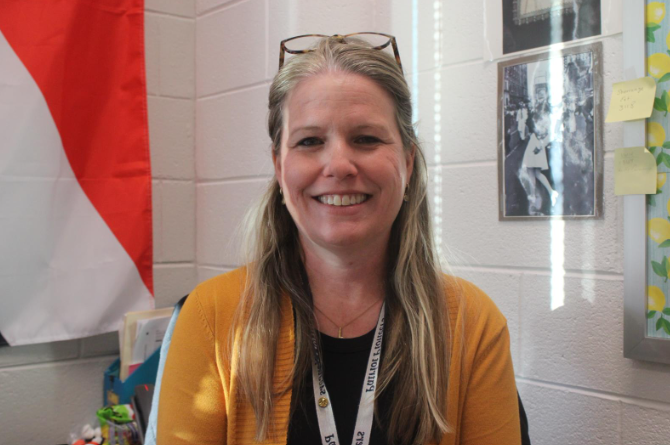
Thinking back to her high school years, Lindsey Cavender, a United States (US) History and Advanced Placement (AP) Human Geography teacher, talked about many high school moments and advice reflecting on it.
Cavender was a high achiever in high school. She put a lot of pressure on herself and described herself as a “worry wart.” One of her first pieces of advice she would give students is not to be so worried.
Cavender stated that “none of this is going to matter in five years.” She discusses that during high school you can get so worried and wrapped up in it, but in five years you’re not going to see any of these people unless you actively seek them out.
Cavender also commented on people who are anxious because they feel like they don’t have anything figured out yet. “It’s okay to not have everything figured out” Cavender states. “Life is a journey, and your ultimate goal can change.”
She explained that the job you might get in the future might not even exist now. If you’re seeking opportunities and learning, you will reach your goal.
Many high schoolers go through anxiety about certain things at school. A study made by the National Library of Medicine conveyed that students’ anxiety increased from the beginning of the school year to the end.
Humanities, a class in the English department, was Cavender’s favorite class. It was a class that was only offered to seniors. Her teacher arranged the seats to be in U shape, to create a more seminar style class. “She treated us like adults,” Ms. Cavender recalled. “You did not even know you were leaning until you left the room,” Cavender stated.
There were times when they would go to the auditorium, and the teacher would teach the class like a college lecture. Those activities in class created a bridge between high school and college. Cavender stated that it was “very impactful when she went into college.”
One of Cavender’s regrets was not being involved with activities and clubs in high school. There were many opportunities in her school, but she never took advantage of them. She advises students, when given opportunities, such as the club fair, to look around and find what interests you.
“If you see what they offer and find something you enjoy, you might find like-minded people and make connections outside of your own friend group” Cavender states.
Being involved in extracurriculars is helpful in your school life. An article in the Honor Society states that being involved in extracurricular activities improves grades, increases college enrollment, and raises educational aspirations. It also helps social and emotional development.
Each teacher shared lessons that inspire others to learn from their mistakes. Coach White emphasized responsibility and time management. Mrs. Cooper encouraged students to learn from failure and to build from it. Mrs. Cavender reminded students not to overthink and that everyone’s paths are different.
Together, with all their stories, they teach that high school is beyond getting good grades. It’s building up your skills, learning from your mistakes, and connecting with the community around you. Their experiences remind us that high school is not the end of your life, but the starting point of a much larger journey.